The National Digital Renal Pathology Service
We are developing a national digital pathology service to support donor kidney decisions through rapid, consultant-verified biopsy review.
Built on the operational experience of the PITHIA trial, the service is designed for the realities of transplant work: narrow time windows, out-of-hours decisions, and the need for clear accountability.
The transplant dilemma
Patients die while waiting for a kidney. At the same time, donated kidneys are declined when there is not enough evidence available quickly enough to support a safe decision.
As the donor pool ages, transplant teams are increasingly offered kidneys from older donors. Many will function well. But when information is incomplete at the moment of retrieval, the risk of implantation is understandably judged too high.
Closing that gap has often meant relying on gross inspection, variable semi-quantitative scoring, or finding a renal histopathologist out of hours.
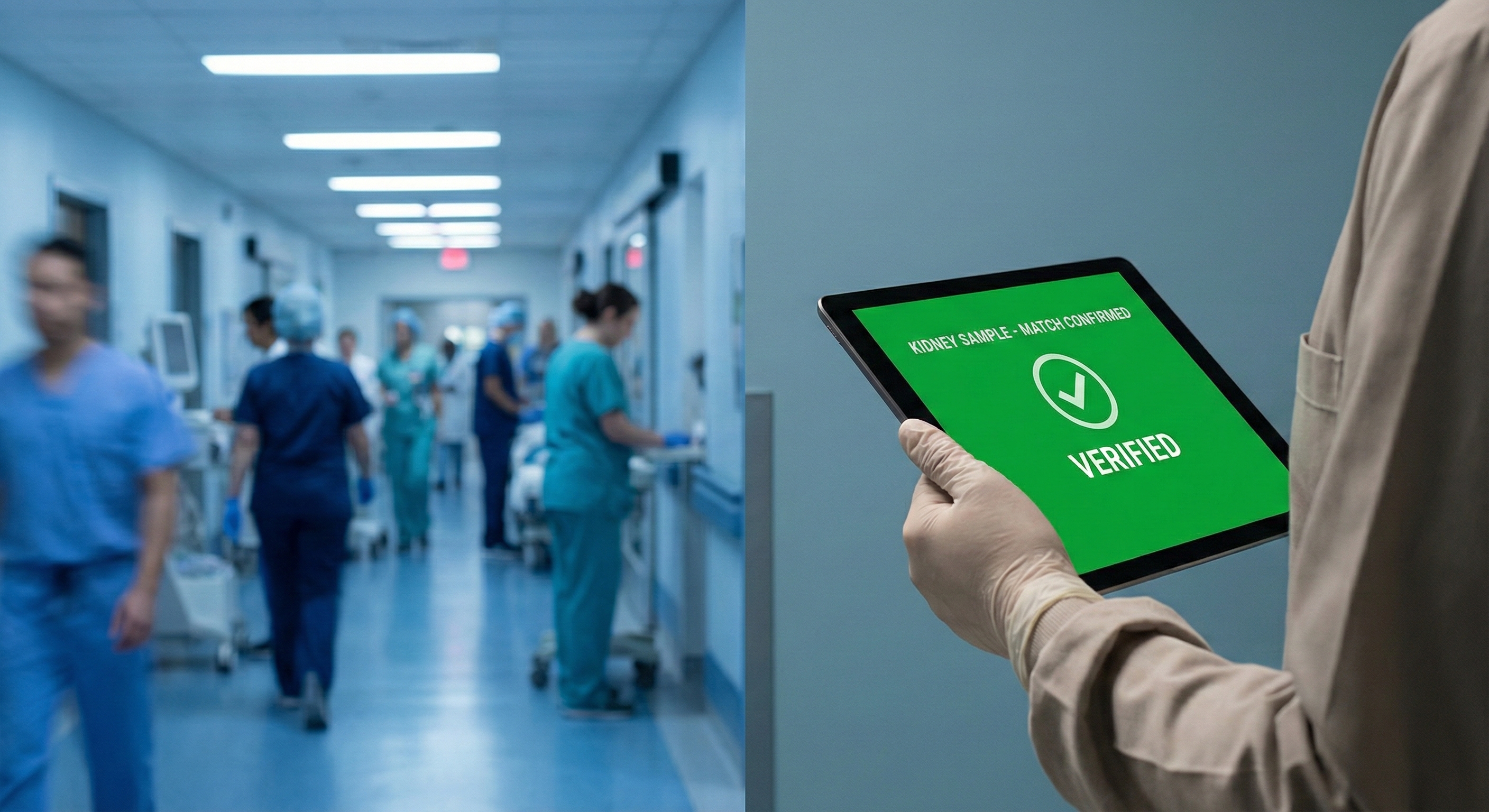
From trial to service
The Pre-Implantation Trial of Histopathology In renal Allografts (PITHIA) asked a practical question: could a national, 24-hour biopsy review service change how often kidneys are safely used?
PITHIA.ai provides the service infrastructure to deliver that workflow at scale. The aim is simple: wherever a donor kidney is retrieved in the UK, a specialist can review the biopsy within the transplant decision window.
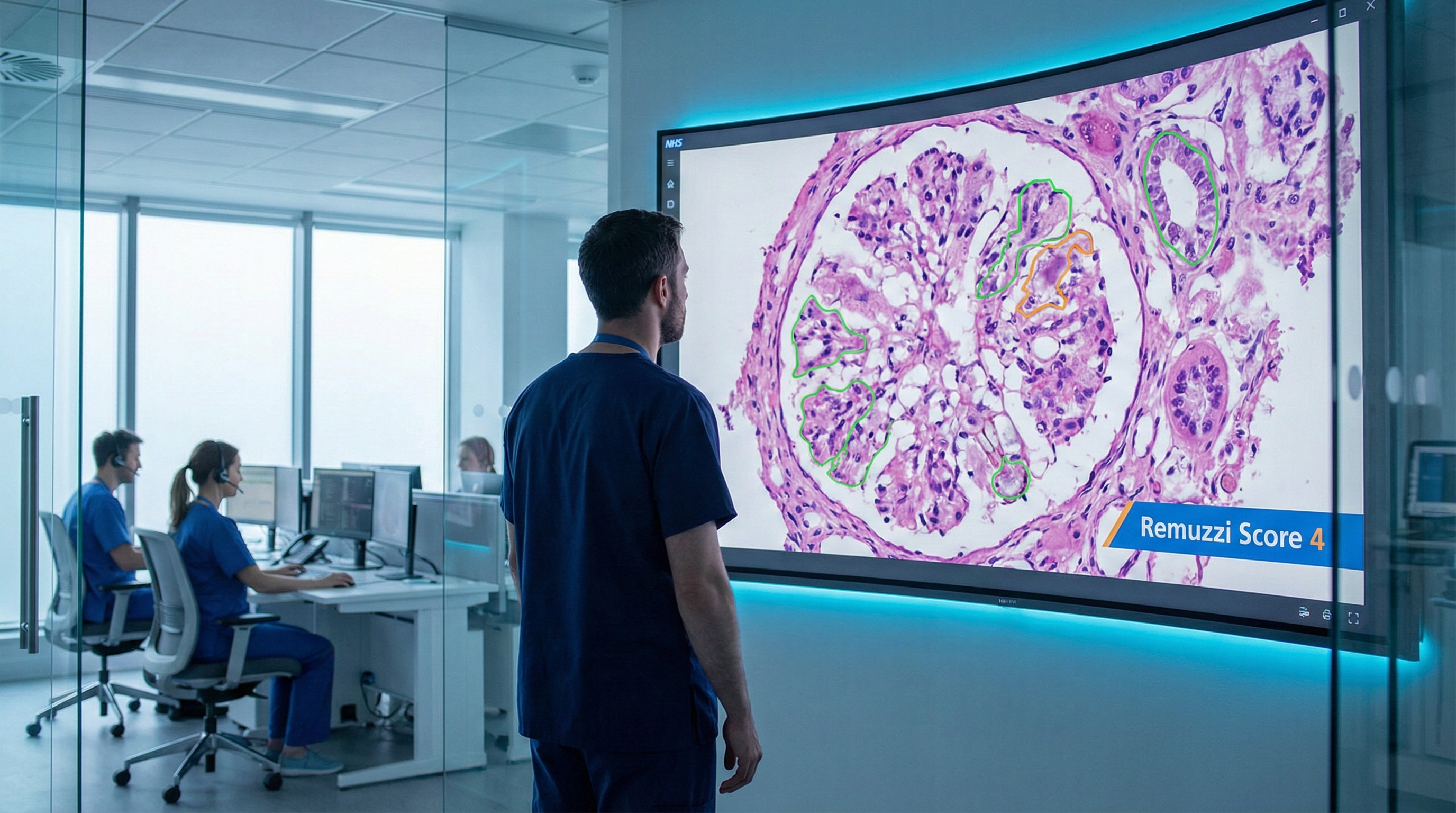
Quantitative measures, verified by consultants
The service supports quantitative morphometry alongside clinical judgement. It provides reproducible measurements of chronic injury and keeps the measurement and verification steps explicit.
Automated pre-screening prepares a draft assessment before a consultant opens the case. We use the term "Ghost User" for this function: model-generated measurements and annotations presented for verification.
When the report is issued, it includes a traceable chain from automated analysis to named consultant sign-off.
PITHIA.ai is being developed in partnership with NHS Blood and Transplant.